
168K subscribers
1,098 views·
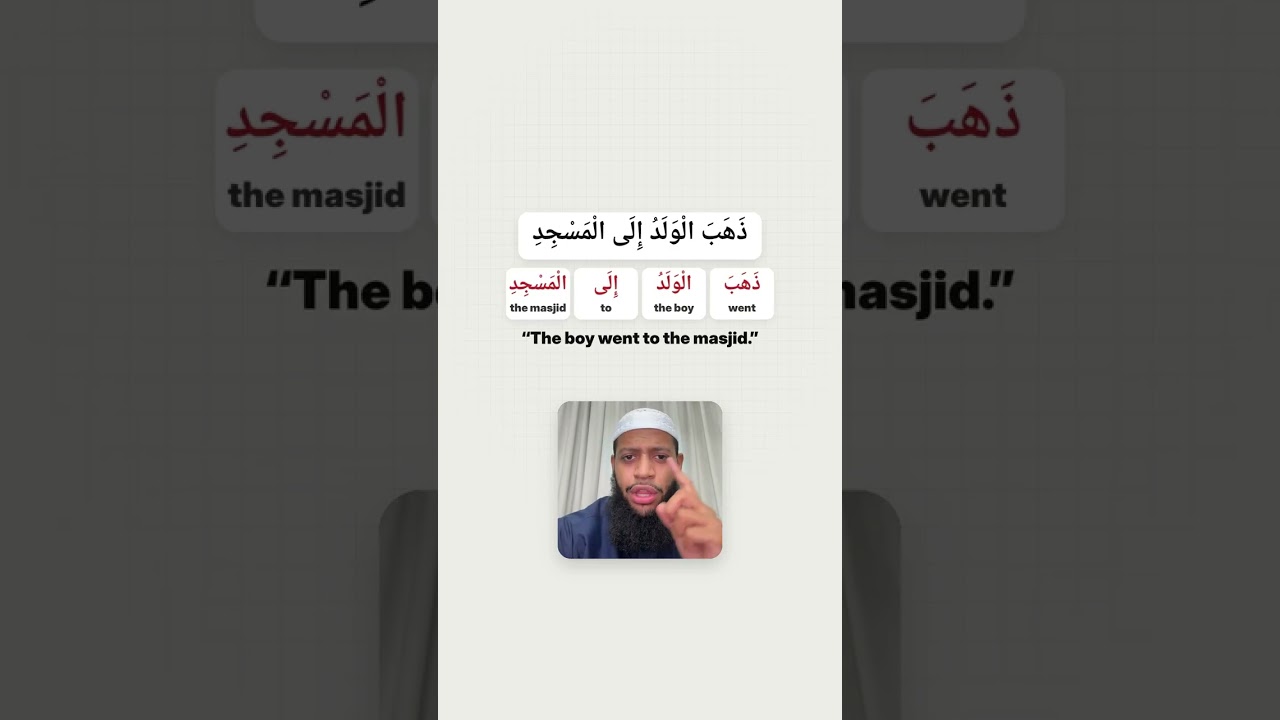
Here is the breakdown of these three expressions. Level 1 "What is this?" ما هذا؟ Mā hādhā? Word by word: ما (mā) → what هذا (hādhā) → this ما is one of the simplest question words in Arabic. It asks about non-human things: objects, concepts, ideas. When you combine it with هذا, you are asking someone to identify what is in front of you. This structure appears constantly in the Quran when Allah asks humanity to reflect. Level 2 "This is a head." هذا رأس Hādhā ra's Word by word: هذا (hādhā) → this رأس (ra's) → head In Arabic, you do not need the verb "is." The sentence stands without it. This is called a nominal sentence, or جملة اسمية. You state the subject, then the description or identity, and the meaning is complete. رأس comes from the root ر أ س, meaning: head, top, or beginning. Level 3 "This is a foot." هذه رجل Hādhihi rijl Word by word: هذه (hādhihi) → this (feminine) رجل (rijl) → foot Notice the shift. For masculine nouns, you use هذا. For feminine nouns, you use هذه. رجل is feminine in Arabic, so the pronoun changes. رجل comes from the root ر ج ل, and it can mean foot or leg depending on context. The Quran uses it when describing walking, journeying, and standing in prayer. Watch this video to learn how to get fluent in Arabic: https://youtu.be/djyY0QYIoNU