
168K subscribers
1,481 views·
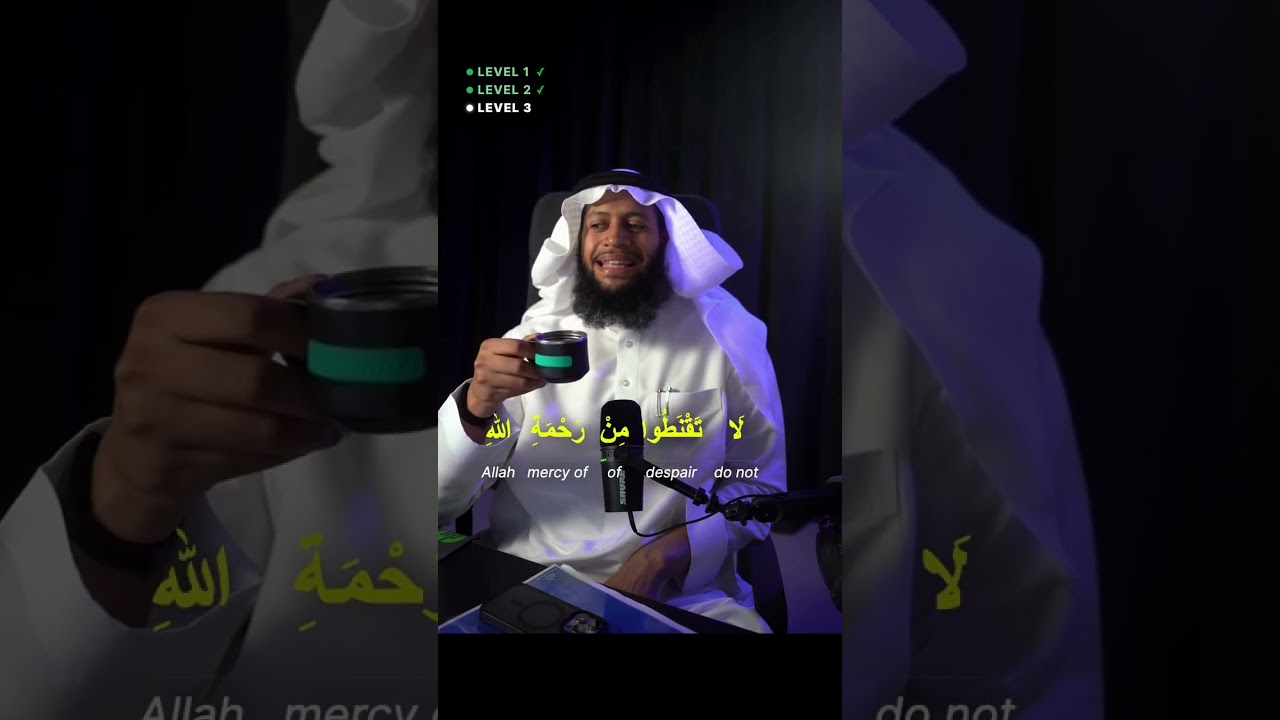
Here is the breakdown of these three expressions. Level 1 "I thank my Lord." أَشْكُرُ رَبِّي Ashkuru Rabbī Word by word: أَشْكُرُ (ashkuru) → I thank رَبِّي (Rabbī) → my Lord أَشْكُرُ comes from the root ش ك ر meaning gratitude and acknowledgment. The ي at the end of رَبِّي is a possessive pronoun: my. Two words, but the relationship is direct and personal. Level 2 "Indeed, man is ungrateful to his Lord." إِنَّ الْإِنسَانَ لِرَبِّهِ لَكَنُودٌ Inna al-insāna li-Rabbihi la-kanūd Word by word: إِنَّ (inna) → indeed الْإِنسَانَ (al-insāna) → mankind لِرَبِّهِ (li-Rabbihi) → to his Lord لَكَنُودٌ (la-kanūd) → ungrateful كَنُود means withholding gratitude. The لَ before it adds emphasis: truly ungrateful. This is the opposite of شُكْر. Level 3 "If you are grateful, I will surely increase you." لَئِن شَكَرْتُمْ لَأَزِيدَنَّكُمْ La'in shakartum la-azīdannakum Word by word: لَئِن (la'in) → if شَكَرْتُمْ (shakartum) → you are grateful لَأَزِيدَنَّكُمْ (la-azīdannakum) → I will surely increase you This is a Divine promise. The لَ and نَّ both add emphasis: I will absolutely increase you. Your gratitude unlocks more. Click the link in profile to help you understand the Quran without translation 👆