
168K subscribers
1,892 views·
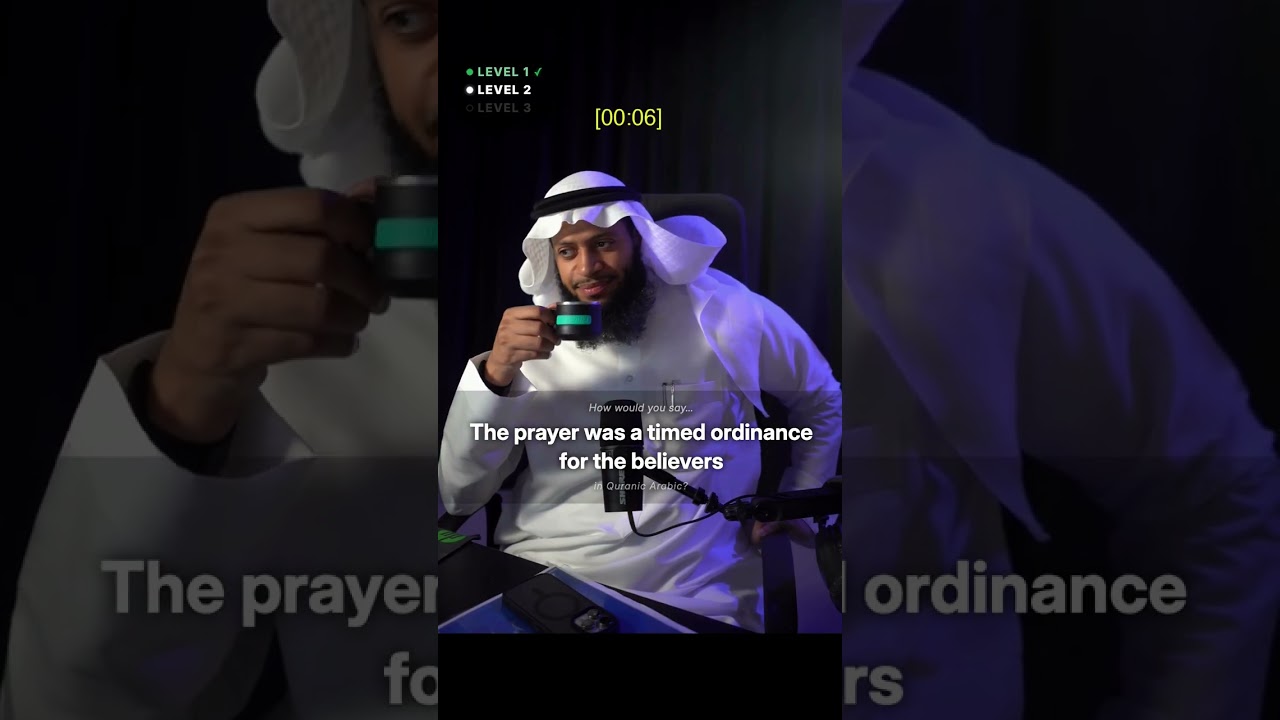
Here is the breakdown of these three expressions. Level 1 "I am going to the masjid." أَنَا ذَاهِبٌ إِلَى الْمَسْجِدِ Anā dhāhibun ilā al-masjid Word by word: أَنَا (anā) → I ذَاهِبٌ (dhāhibun) → going إِلَى (ilā) → to الْمَسْجِدِ (al-masjid) → the masjid ذَاهِبٌ comes from the root ذ ه ب meaning to go. The pattern فَاعِل shows the active participle: the one doing the action. You're not just stating motion. You're describing yourself as a goer. Level 2 "The prayer was a timed ordinance for the believers." إِنَّ الصَّلَاةَ كَانَتْ عَلَى الْمُؤْمِنِينَ كِتَابًا مَّوْقُوتًا Inna aṣ-ṣalāta kānat 'alā al-mu'minīna kitāban mawqūtā Word by word: إِنَّ (inna) → Indeed الصَّلَاةَ (aṣ-ṣalāta) → the prayer كَانَتْ (kānat) → was عَلَى (ʿalā) → upon الْمُؤْمِنِينَ (al-mu'minīna) → the believers كِتَابًا (kitāban) → prescribed / written مَّوْقُوتًا (mawqūtā) → timed مَوْقُوتًا comes from و ق ت meaning time. Allah didn't just say "pray." He said: at specific times. Prayer has boundaries. That's mercy. Click the link in profile to help you understand the Quran without translation 👆